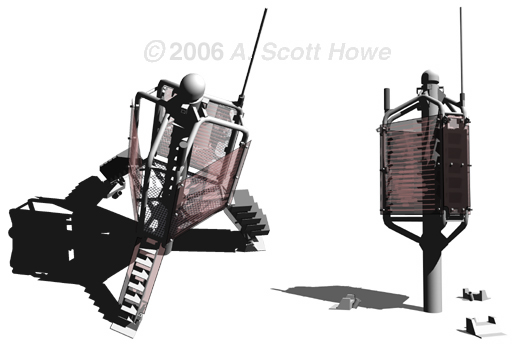
Other images and animations:
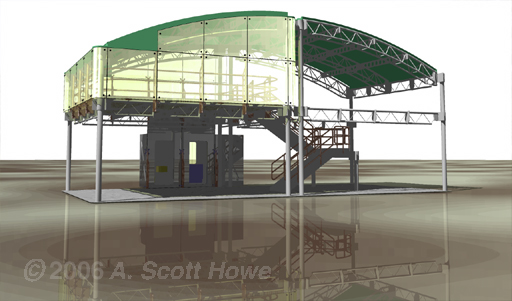
IT Condo animation excerpt showing IF7 Field Factory (2.7mb)
Technical papers and articles:
A.S. Howe (2003). Design Principles for Kinematic Architecture. Proceedings of the Second International Conference on Construction in the 21st Century (CITC-II). 10-12 December, 2003, Hong Kong.
A.S. Howe; I. Ishii; T. Yoshida (1999). Kit-of-parts: A review of object-oriented construction techniques. Proceedings of the International Symposium on Automation and Robotics in Construction (ISARC16). 22-24 September 1999, Madrid, Spain. London: International Association for Automation and Robotics in Construction (IAARC).
Miyamoto, Ishii, Shibata, Dobashi, Howe, Yoshida, Takada, Ueno, Kunugi, Yagi, Nakata, Hatakeyama, Kigawada, Yomo, and Koga (1998). Study on assembly process for large-scale structures. Heisei 10 nendo IMS Kenkyu Seika Koen Ronbushu (1998 IMS Research Results), pp.119-122. Tokyo, Japan: Intelligent Manufacturing Systems (IMS) Center.
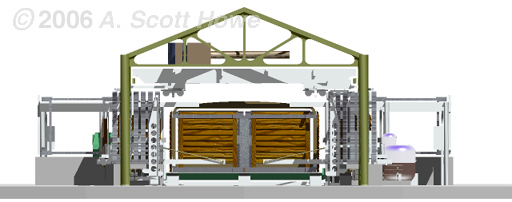
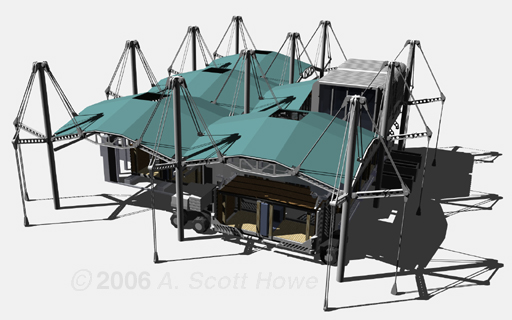
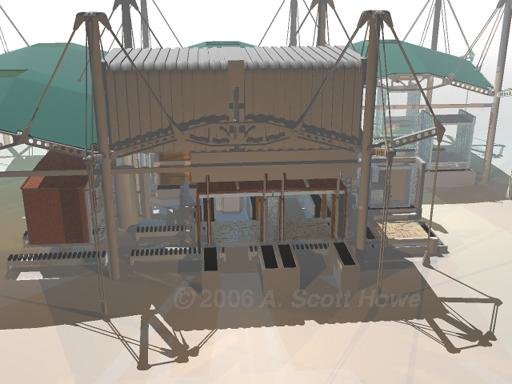
Other images and animations:
The Party Hut film excerpt showing party hut flyby (3.1mb)
Technical papers and articles:
A.S. Howe (2003). Design Principles for Kinematic Architecture. Proceedings of the Second International Conference on Construction in the 21st Century (CITC-II). 10-12 December, 2003, Hong Kong.
A.S. Howe (2000). Designing for Automated Construction. Automation in Construction 9, 3, 259-276.
A.S. Howe; I. Ishii; T. Yoshida (1999). Kit-of-parts: A review of object-oriented construction techniques. Proceedings of the International Symposium on Automation and Robotics in Construction (ISARC16). 22-24 September 1999, Madrid, Spain. London: International Association for Automation and Robotics in Construction (IAARC).
A.S. Howe (1998). A new paradigm for life-cycle management of kit-of-parts building systems. (Doctoral Dissertation, University of Michigan, 1998). University Microfilms International, No. 9909905.
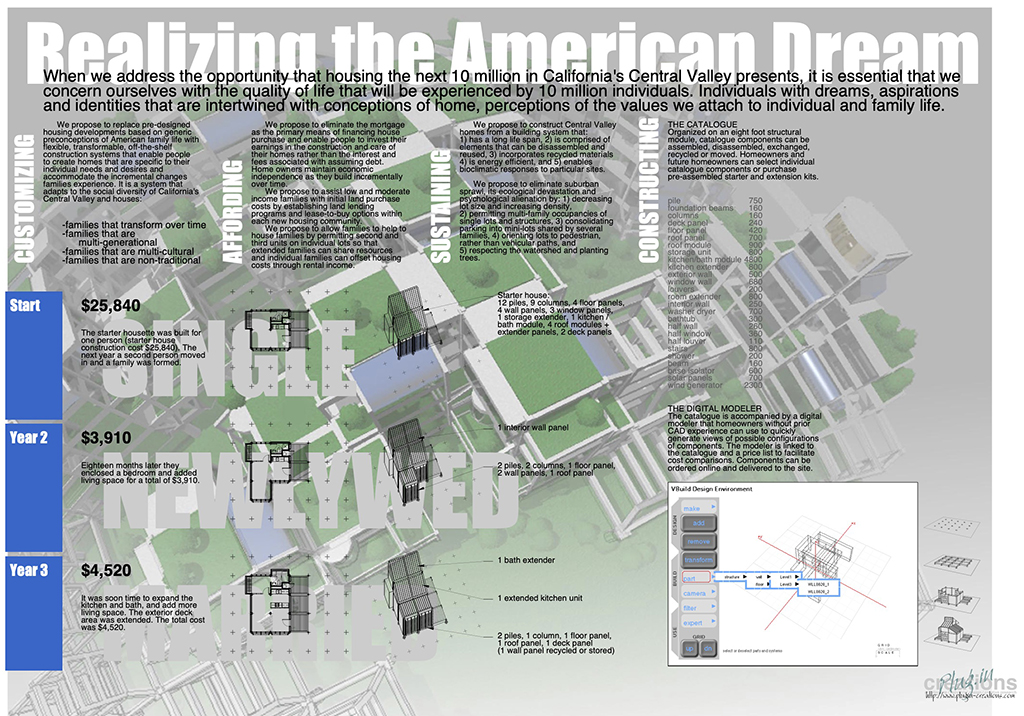
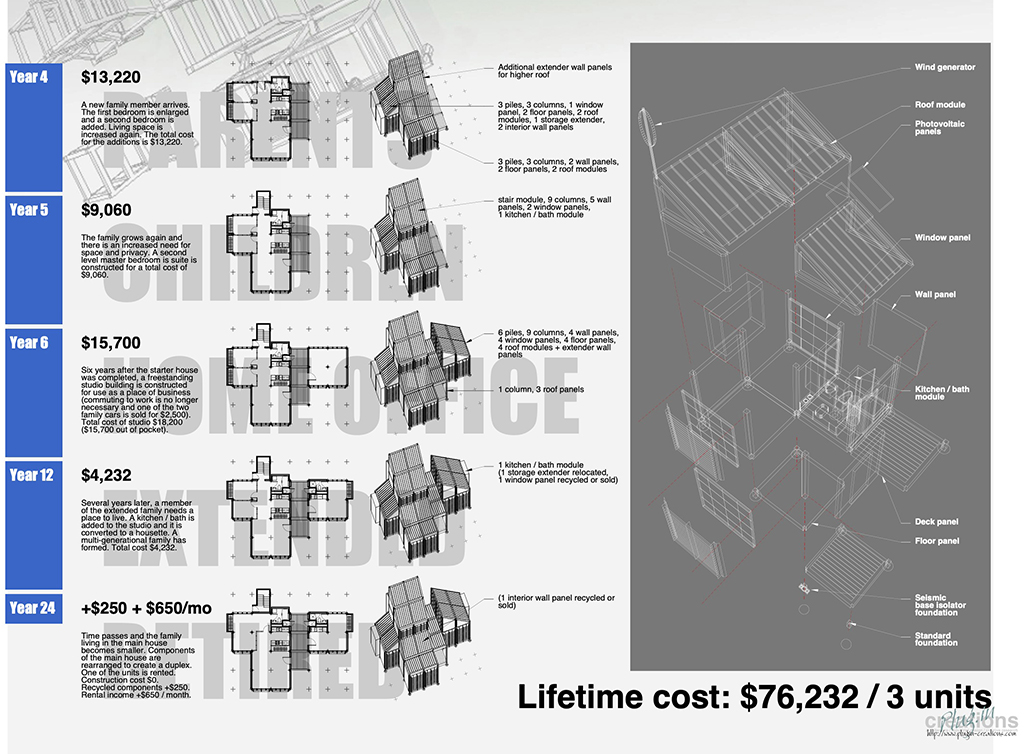
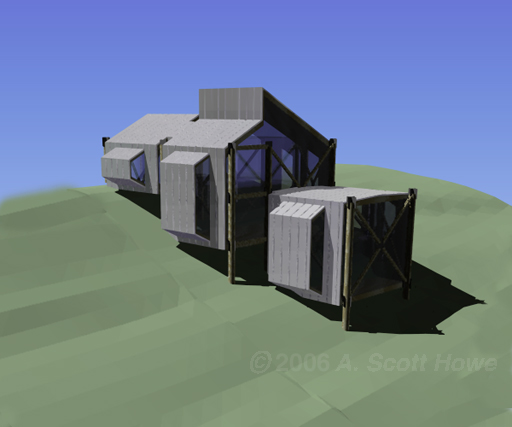
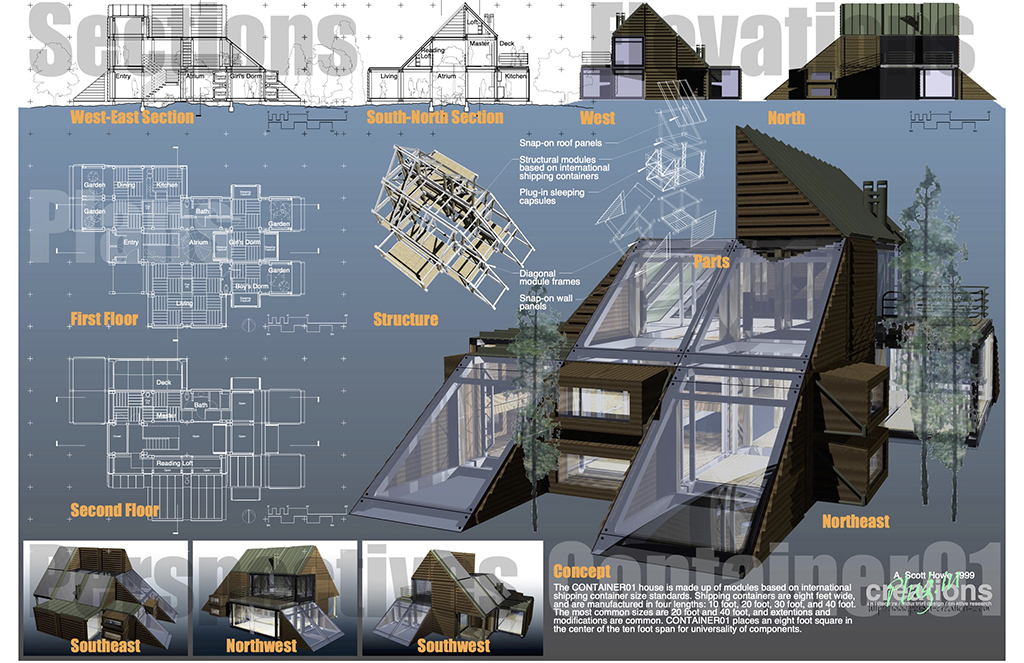
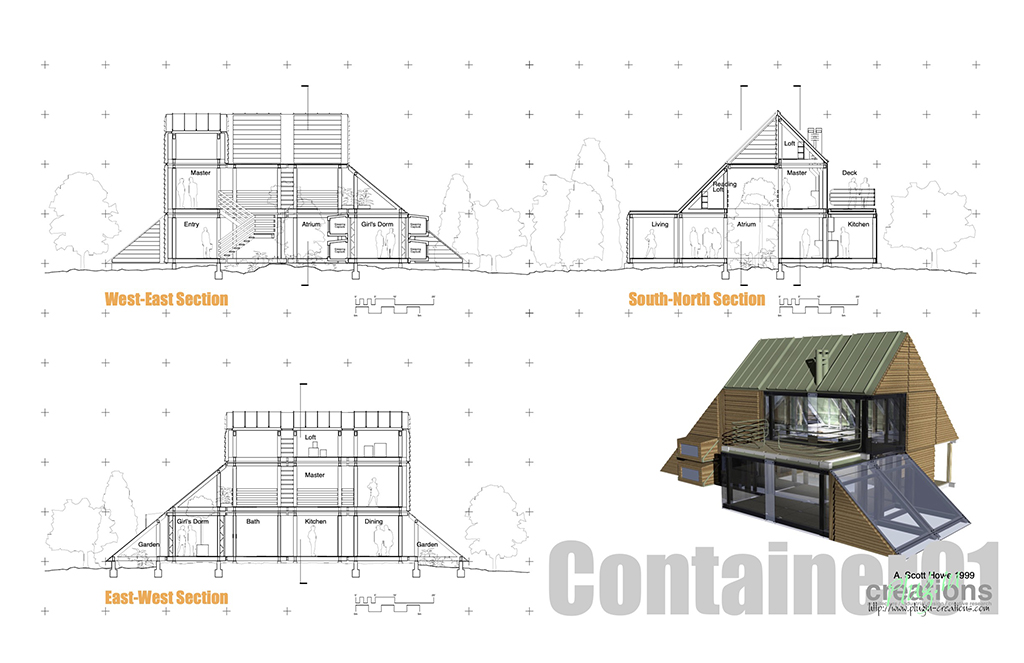
This project won "Housing Design Honorable Mention" and "Small Rural Agricultural Community Honorable Mention" awards in the California Central Valley "Housing the Next 10 Million" design competition sponsored by the AIA California Council in 1999.
Other images and animations:
competition panels (PDF)
Other images and animations:
presentation panels (PDF)
Other images and animations:
presentation panel (PDF)