Dynamic Intelligent Building (1990-1995)
.....honorary mention computer graphics category "Dynamic Intelligent Building Atrium", presented by Der Prix Ars Electronica (1990), International Compendium of the Computer Arts.
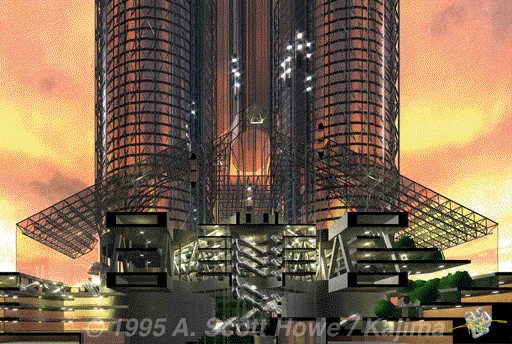
DESCRIPTION: 1,500,000m2 (16,148,000sf) office / residential / hotel 200 floor, 800m high super highrise building.The building would include 320 residential units and 2,500 hotel rooms and would support an occupancy load of 40,000 to 50,000.
CLIENT: Completed as an inhouse feasibility research study project for Kajima Corporation.
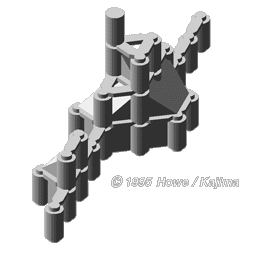
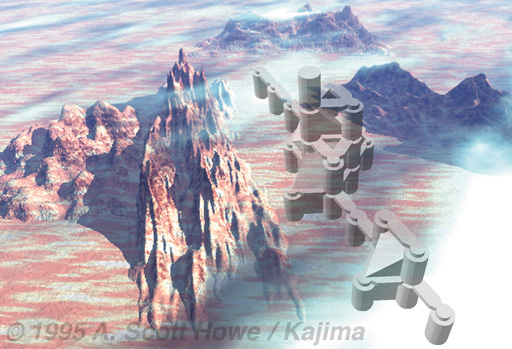
CONCEPT: Twelve 50-story cylindrical units are assembled in the form of four towers connected by a super girder skeletal structural system. Sky lobbies coinciding with the super girders provide platforms for express elevator platforms, heliports and access to local elevator systems.
DESIGN TEAM: Project overseer: Kajima Corporation Vice President Takuji Kobori. Project manager: Toshihiko Kubota. Project Architect: Sadaaki Masuda. Conceptual design: A. Scott Howe. Structural design: Shigeru Ban, Takaharu Fukuda, Osamu Nohira. Mechanical & fire protection: Yoshinori Kitamura, Hideo Tanaka, Hiroomi Sato.
COST: Estimated 1 trillion yen.
DATE: Fall 1990.
STATUS: Under continued research in various forms: DIB-200, DIB-120 Makuhari plan, DIB City, and Hyper Building, as described below.

DIB-120 CLIENT: (classified information)
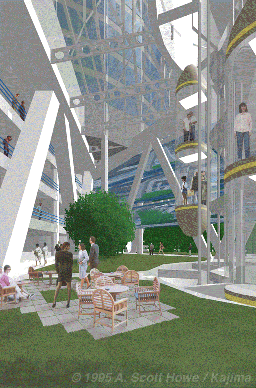
DIB-120 CONCEPT: Based on technology developed in the Dynamic Intelligent Building project, seven 40-story hexagonal units are assembled in the form of three towers connected by a super girder skeletal structural system. Sky lobbies coinciding with the super girders provide platforms for express elevator platforms, heliports and access to local elevator systems.
DIB-120 DESIGN TEAM: Project manager: Toshihiko Kubota. Project architect: A. Scott Howe. Structural design: Shigeru Ban. Other team members: Toshiyuki Watanabe, Izumi Doihara.
DIB-120 COST: Estimated 395.4 billion yen.
DIB-120 DATE: Spring 1991.
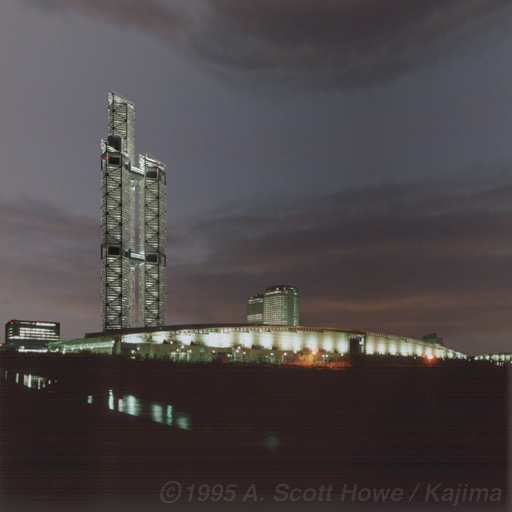
DIB-City CLIENT: Completed as an inhouse feasibility research study project for Kajima Corporation.
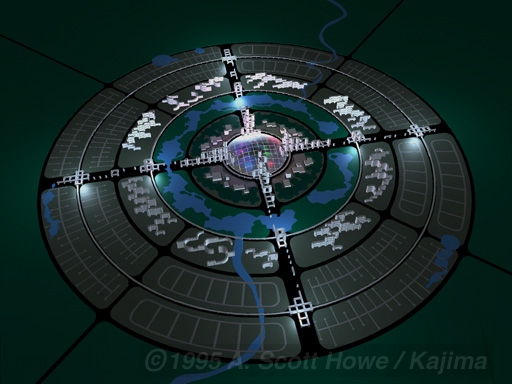
DIB-City CONCEPT: Based on technology developed in the Dynamic Intelligent Building project, a core infrastructure system is established to which DIB office functions, commercial, service and residential neighborhoods are attached. The infrastructure element consists of information systems, mass transit systems,public utility network and energy and conservation functions. One possibility studied was arrangement of infrastructure elements in such a way that the city could be circular in form.
DIB-City DESIGN TEAM: Project overseer: Kajima Corporation Vice President Takuji Kobori. Project manager: Toshihiko Kubota. Project architect: Sadaaki Masuda. Conceptual design: A. Scott Howe. Design team member: Takahisa Kurita. Conceptual design team members: Toshiyuki Watanabe, Yoshiaki Nishimura. Kobori Research Institute members: Masamitsu Miyamura, Mitsuharu Nakahara, Katsuhisa Kanda. Mechanical engineering team members: Yoshinori Kitamura, Hideo Tanaka.
DIB-City COST: Estimated 12.5 trillion yen.
DIB-City DATE: Winter 1992.
HYPER BUILDING CLIENT: International Hyper Building research group.
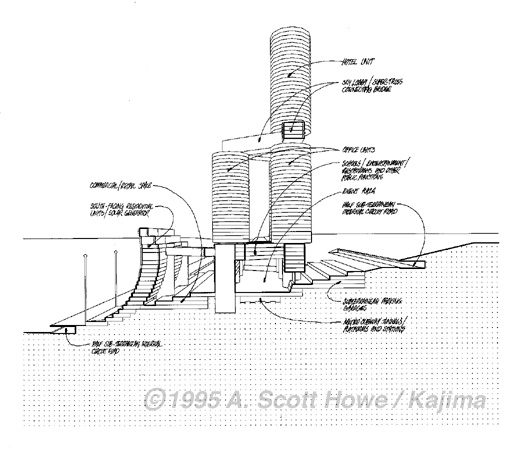
HYPER BUILDING CONCEPT: This particular version was based on work completed in the DIB city project. Based on technology developed in the Dynamic Intelligent Building project, a core infrastructure system is established to which DIB office functions, commercial, service and residential neighborhoods are attached. The infrastructure element consists of information systems, mass transit systems,public utility network and energy and conservation functions.
HYPER BUILDING DESIGN TEAM: Conceptual design for this version: A. Scott Howe, Sadaaki Masuda on the Hyper Architectural Space team. Other teams included Structure, Fire Safety, Transportation / Circulation, etc. for a total of 13 teams.
HYPER BUILDING COST: not estimated
HYPER BUILDING DATE: Spring 1995.
HYPER BUILDING STATUS: A report consisting of a series of concepts addressing the various team topics. Three conceptual buildings were designed by Nobuaki Furuya, Rem Koolhaas, and Paolo Soleri.