Marine Structures
OBJECTIVES: All courses and studios taught by Dr. Howe in regards to extreme architecture rigorously conform with National Architectural Accrediting Board (NAAB) Condition 13 Criterion 4 "Research Skills", Criterion 5 "Formal Ordering Systems", Criterion 17 "Site Conditions", Criterion 18 "Structural Systems", Criterion 19 "Environmental Systems", Criterion 21 "Building Envelope Systems", Criterion 22 "Building Service Systems", Criterion 23 "Building Systems Integration", and Criterion 24 "Building Materials and Assemblies". Dr. Howe also emphasizes a link with Criterion 3 "Graphic Skills", Criterion 6 "Fundamental Design Skills", Criterion 15 "Sustainable Design", and Criterion 16 "Program Preparation".
INPUT / CONSTRAINTS:
- Prove technical feasibility in the pertinent extreme environment.
- Cost considerations are optional, secondary to technical feasibility.
OUTPUT / DELIVERABLES:
- Viable engineered structures appropriate for exreme environment.
- Elegant architectural solutions integrated with engineered systems.
EXAMPLE STUDENT WORK:
Lui Tin Pak (HKU, MArch thesis, 2003-04, co-tutors Dr. Howe and Dr. Alex Amato) designed a floating factory for large building components (figure 1 and figure 2). Since parts of bridges, buildings, and other structures are often limited by their size required for transporting them, Pak's factory can be relocated to a location nearby to coastal sites, so larger pieces can be manufactured. The factory uses off-the-shelf floating platforms based on the Kajima Self-Elevating Platform (SEP) technology, and when the platform is in the right location, can extract its legs to the ocean floor (figure 3) so that the platform safely sits high above the waves. The floating modules dock together, and do not require a perfect line up due to flexible connectors (figure 4).
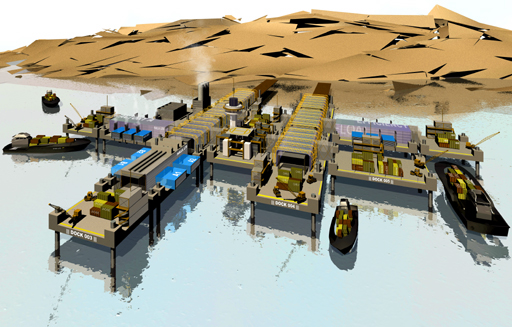
Figure 1: Floating factory by Lui Tin Pak
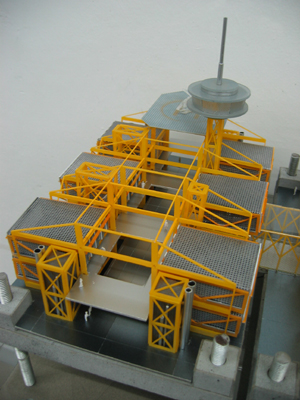
Figure 2: Model of floating factory
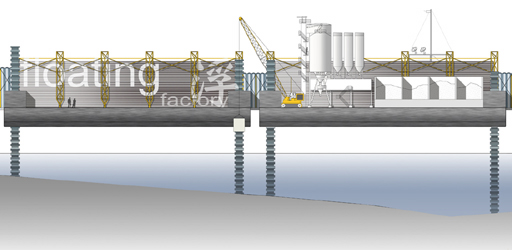
Figure 3: Legs extendable to ocean floor
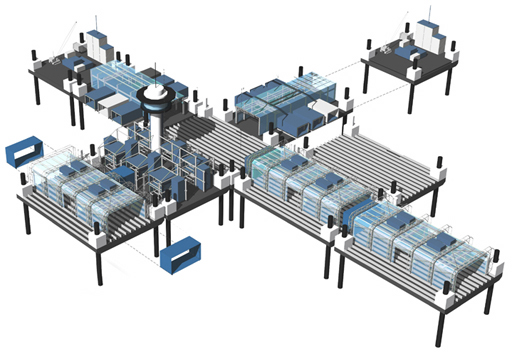
Figure 4: Modular system