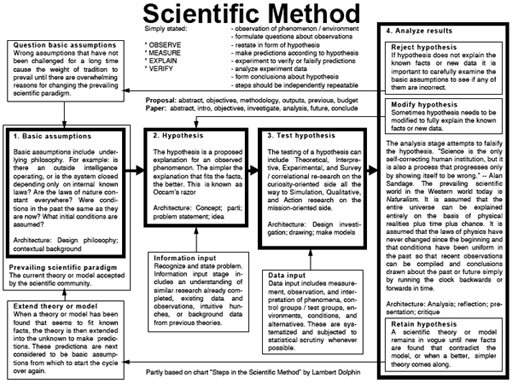
| DESCRIPTION: A good list of research methodologies are theoretical, interpretive, experimental, survey / correlational, simulation, qualitative, and action / applied (summarized here). Each step in the architectural design process, from sketching to model making to technical drawing to post-occupancy evaluation maps satisfactorily onto one or more of these methodologies. Therefore, if architects were to become aware of the tools available for investigation in these methodologies, every aspect of their technique in the design process is sure to improve and become more rigorous. The scientific method is taught sometimes directly (to thesis and PhD students), and sometimes through methodology as applied to design problems. Dr. Howe conducts seminars for thesis writing and research, where the various methods are discussed.
OBJECTIVES: All studios and courses taught by Dr. Howe under the scientific methods theme rigorously conform with National Architectural Accrediting Board (NAAB) Condition 13 Criterion 1 "Speaking and Writing Skills", Criterion 2 "Critical Thiniking Skills", Criterion 4 "Research Skills", Criterion 5 "Formal Ordering Systems", and Criterion 15 "Sustainable Design".
INPUT / CONSTRAINTS:
- Good research approaches for precedent literature.
- Rigorous approach to seven research methodologies.
- Proper citations and references, proper formatting.
OUTPUT / DELIVERABLES:
- Well-written technical papers and thesis reports.
EXAMPLE STUDENT WORK:
(under construction)
|