Grammar-based Design
One study that Dr. Howe has his students perform is to develop a reductionist grammatical approach using "workstations" as a basic primitive for generating space. For example, a simple rectangle can represent a workstation, similar to the Japanese "tatami" system: one half of the rectangle is where the person sits or stands, and the other half is where the activity is performed (the rectangle can also be a "prone workstation" considering that every activity, including sleep, must be accomodated). We can derive a set of level 1 primitives (figure 1) based on a single workstation.

Figure 1: Level 1 primitives: workstation, connector, structure
These level 1 primitives have a set of rules where only the triangles can be fitted together to create self-completing egress and circulation. Using the primitives in level 1, higher level primitives can be formed, adding one additional element for connector (figure 2).

Figure 2: Level 2 primitive permutations
The level 2 primitives can be assembled using a similar rule of connecting triangles to make level 3 primitives, etc. In this simple example, designed by student Raymond Wing Hin Chu (HKU, arch2013 2nd year design studio, 2001-02, co-tutors Dr. Howe and Ray Zee), a fractal hierarchy of spaces are automatically generated as the levels fill out, consisting of nested workstations (figure 3). The spatial system also generates itself into a machine-readable tree structure, where comfortable amounts of common space, circulation, and user space are automatically generated.
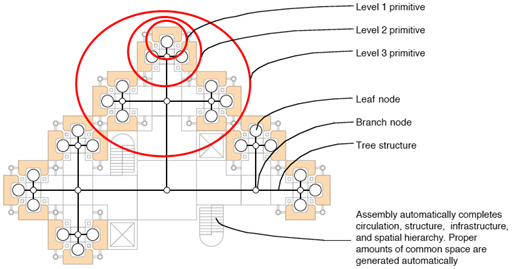
Figure 3: Fractal hierarchy of spaces becomes tree structure
As with natural systems, the entire possible fractal pattern need not be filled out completely in order to have valid structure. The whole fractal pattern can be used as an underlay grid to create rule-based valid structure with optimum user space and circulation (figure 4).
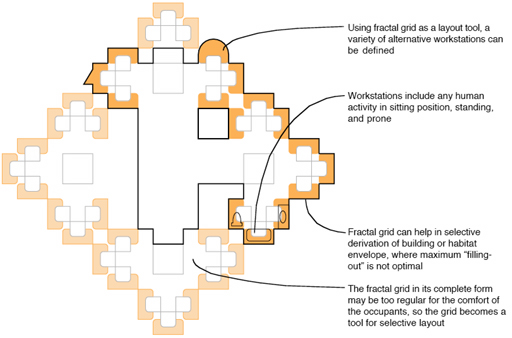
Figure 4: Fractal grid used to selectively layout valid structure and spaces
Other ways in which grammar-based design helps with architectural education is by helping students understand how a quantifiable tree structure can be mapped on top of almost all building subsystems. Tree structures in systems are usually double trees which are mirrored, supply / return, or overlapped. A rule-based approach, again using Raymond Chu's example, a valid supply / return tree structure can automatically be generated (figure 5).
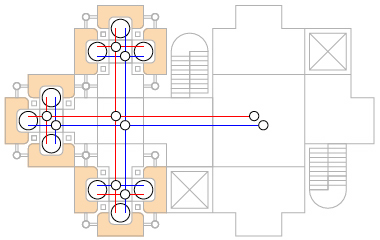
Figure 5: Supply / return tree structure
Using accumulative load principles, we can see that even the spatial system for double egress can be mapped onto a cumulative load tree structure with overlapping branches (figure 6).
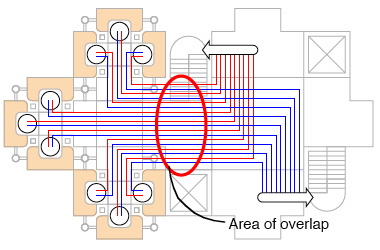
Figure 6: Double egress system with cumulative loads and overlap
OBJECTIVES: All studios and courses taught by Dr. Howe under the scientific methods theme rigorously conform with National Architectural Accrediting Board (NAAB) Condition 13 Criterion 1 "Speaking and Writing Skills", Criterion 2 "Critical Thiniking Skills", Criterion 4 "Research Skills", Criterion 5 "Formal Ordering Systems", and Criterion 15 "Sustainable Design".
INPUT / CONSTRAINTS:
- Rule-based and automated assembly constraints.
- Nested ergonomic "workstation" configurational rules for space generation.
OUTPUT / DELIVERABLES:
- Logical frameworks of rule-based hierarchical structure and spaces.
- Quantified kit-of-parts systems where valid structure is automatically produced.
EXAMPLE STUDENT WORK:
Teresa Mei Lam Wong (HKU, arch2013 2nd year design studio, 2001-02, co-tutors Dr. Howe and Ray Zee) developed a grammatical approach to generating space, using "L-shaped" partitions that could be oriented in any way. The rules create a smooth "flow" of space where the L-shapes direct the flow and change its direction (figure 1). The grammatical approach results in a strangely pleasing jumble of flats that are fitting for the environment (figure 2).

Figure 1: Spatial flow diagram shows how spaces are generated according to rules
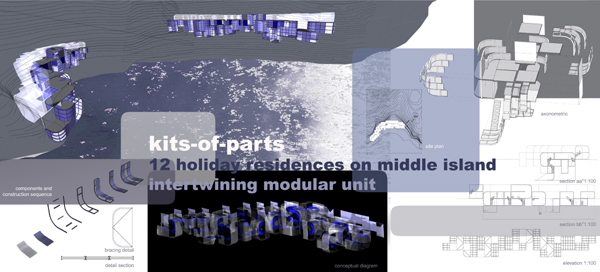
Figure 2: Wong's grammatically-generated residential units.
Colin Zimmerer-Mazza (UofO, arch484/584 vertical studio, 1998-99) designed a system for generating space using grammatically assembled cuboid bays and bridges (figure 3).
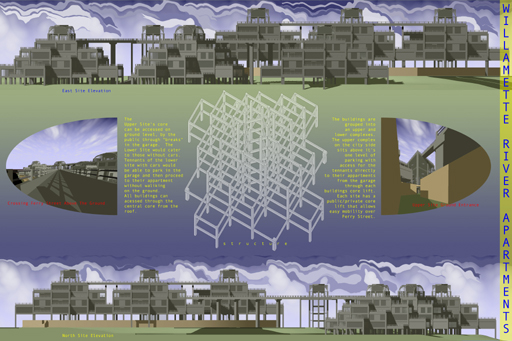
Figure 3: Grammatically-generated spatial system by Colin Zimmerer-Mazza